
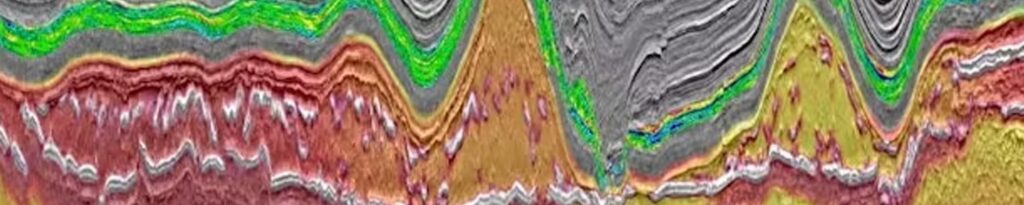
High-Resolution Bathymetry for Accurate Seabed Mapping
Multibeam Echo Sounder (MBES) data lies at the heart of every modern hydrographic and geophysical survey.
At GeoSubsea, we specialize in transforming raw MBES soundings into high-accuracy, high-resolution bathymetric datasets that form the foundation for offshore engineering design, geohazard assessment, and environmental monitoring.
Our processing workflows follow IHO S-44, IMCA S006, and ISO 9001 quality standards, ensuring the highest level of precision and reliability from acquisition to final deliverables.
Understanding MBES and Its Importance
A Multibeam Echo Sounder transmits acoustic pulses across a wide swath of the seabed and records travel times of reflected signals to calculate depth.
This method produces a dense array of depth measurements (soundings), enabling accurate 3D modeling of the seafloor.
High-quality MBES data allows clients to:
- Visualize and analyze seabed morphology and structure
- Detect objects, debris, and potential obstacles
- Support offshore wind turbine foundation design and cable route planning
- Monitor seabed changes over time through repeat surveys
- Assess dredging volumes, scour risk, and seabed mobility
At GeoSubsea, we combine advanced hydrographic processing tools, experienced data analysts, and rigorous QC procedures to transform raw acoustic soundings into precise and visually compelling bathymetric products.
Our MBES Data Processing Workflow
Every dataset we handle undergoes a structured, multi-stage processing workflow, designed to maximize data quality and ensure full traceability from acquisition to output.
1. Data Import and Quality Assessment
- Import of raw MBES data files along with associated navigation, motion, and sound velocity profiles (SVP).
- Initial review of acquisition logs to verify calibration parameters such as patch test, sensor offsets, and timing.
- Check for position accuracy, attitude stability, and synchronization between motion sensors, GPS, and MBES systems.
- Visualization of raw soundings and water column data to identify potential data gaps or outliers.
This stage ensures a complete understanding of survey conditions and highlights any data requiring reprocessing or exclusion.
2. Sound Velocity and Tidal Correction
Accurate depth computation depends on precise knowledge of how sound travels through the water column.
We apply SVP corrections derived from CTD casts, sound velocity profilers, or real-time sensors to compensate for vertical sound speed variability.
- Interpolation of SVP data across survey lines for consistent refraction correction
- Adjustment for tide and dynamic draft to align depths with chart datum
- Verification of vertical datums using tidal gauge or VORF models (where applicable)
By combining sound velocity and tidal adjustments, GeoSubsea ensures depth accuracy to centimeter-level precision.
3. Motion, Beam Angle, and Positioning Compensation
All MBES data are corrected for vessel motion and attitude to ensure each sounding represents its true seabed position.
Corrections applied include:
- Heave, pitch, roll, and yaw motion adjustments using IMU data
- Beam angle refraction and beam footprint correction
- Real-time kinematic (RTK) GPS positioning and lever-arm offset compensation
- Error modeling and positional uncertainty estimation (TPU analysis)
These corrections are critical to achieving an accurate and seamless seabed model across multiple survey lines.
4. Data Cleaning and Noise Removal
After preliminary corrections, we apply statistical and visual QC to remove erroneous or spurious soundings.
- Despiking algorithms and median filters to eliminate outliers
- Detection and removal of water column noise, multipath returns, and “flyaway” beams
- Crossline comparison and difference mapping to verify consistency between overlapping passes
- Manual editing in point cloud viewers for quality assurance
Our noise removal process ensures only the most reliable soundings are retained for surface modeling.
5. Gridding, Interpolation, and Surface Generation
Once the cleaned point cloud is validated, data are interpolated to generate continuous bathymetric surfaces.
- Selection of optimal grid resolution based on survey scale and water depth
- Use of CUBE, weighted mean, or kriging interpolation algorithms depending on seabed complexity
- Generation of Digital Terrain Models (DTMs) and Digital Elevation Models (DEMs)
- Application of smoothing and hillshading for visual interpretation
These gridded surfaces form the basis for engineering analysis, geohazard mapping, and volume calculations.
6. Quality Control (QA/QC) and Validation
Quality is verified at every stage of processing, following international hydrographic standards.
GeoSubsea performs independent crossline analysis, surface differencing, and uncertainty assessment to ensure all outputs meet or exceed required accuracy thresholds.
- Cross-check of depth residuals between overlapping lines
- Validation against known reference points or previous surveys
- Documentation of uncertainty models and QC statistics
Each project concludes with a QA/QC summary report, providing transparency and traceability for clients and auditors.
Deliverables
At the completion of each project, GeoSubsea provides a comprehensive suite of deliverables ready for engineering, GIS, and reporting integration:
- Cleaned point cloud datasets (XYZ, LAS, or ASCII formats)
- High-resolution bathymetric grids and DTMs (GeoTIFF, BAG, or ESRI GRID)
- Contour and slope maps highlighting seabed morphology
- Hillshade and backscatter mosaics for enhanced visualization
- QA/QC documentation including accuracy metrics and metadata files
- Final technical report summarizing processing steps, corrections, and methodologies
All products are fully geo-referenced and compatible with client software such as QGIS, ArcGIS, AutoCAD, and Global Mapper.
Integration with Other Geophysical Datasets
MBES data are often integrated with Side Scan Sonar (SSS), Sub-Bottom Profiler (SBP), and Magnetometer datasets to provide a complete understanding of both the seabed surface and sub-seabed structure.
GeoSubsea’s team ensures that bathymetric grids align precisely with other datasets, enabling seamless interpretation and mapping.
This integration supports multi-layered analyses such as:
- Seabed classification (hard vs. soft sediment)
- Geohazard and obstruction mapping
- Engineering design for cable routes, turbine foundations, and trenching
Why Choose GeoSubsea for MBES Processing
- Extensive experience in offshore wind, cable route, and oil & gas survey projects
- Advanced processing tools (QPS, CARIS, Hypack, Global Mapper, Fledermaus)
- Strict adherence to IHO/IMCA quality control standards
- Customized workflows for shallow or deep-water environments
- Rapid turnaround and detailed technical reporting
- Seamless integration with GIS and CAD systems
From Soundings to Seafloor Insight
At GeoSubsea, we believe that bathymetry is more than just depth — it’s the foundation of every offshore decision.
Through meticulous MBES processing, we transform millions of acoustic soundings into actionable spatial intelligence that helps our clients plan, design, and operate safely on and beneath the sea.
📧 Contact us at info@geosubsea.com to discuss your MBES data processing needs or request a sample of our deliverables.